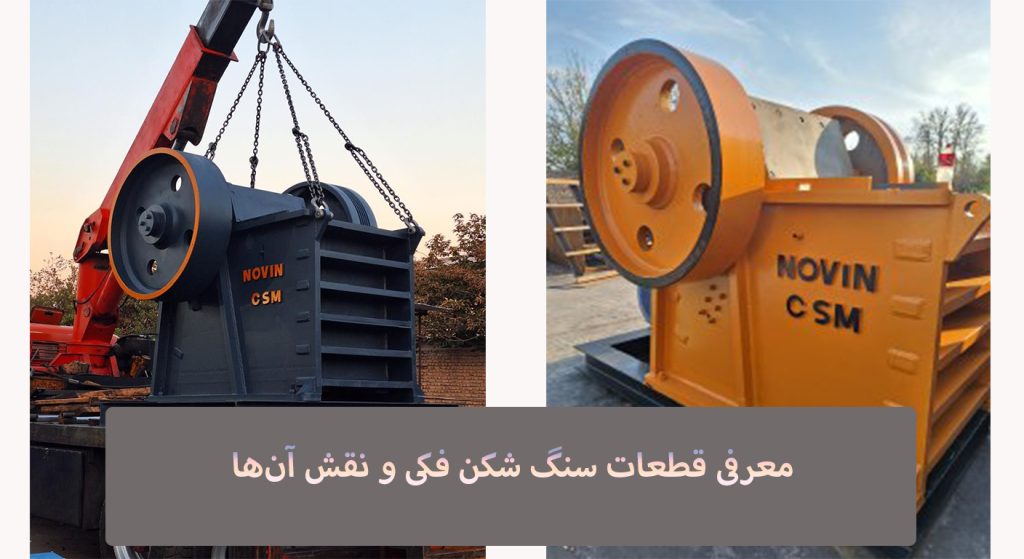
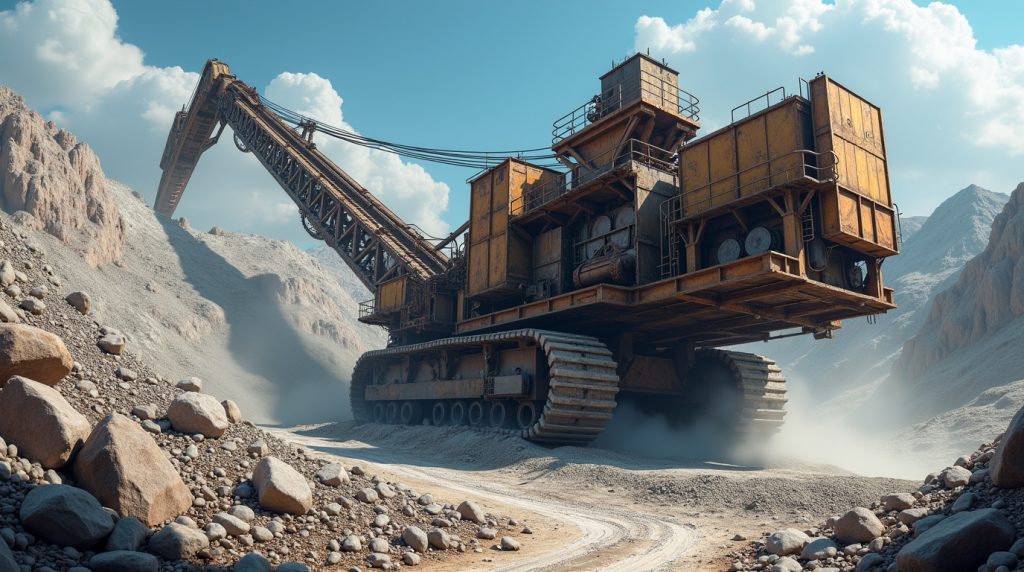
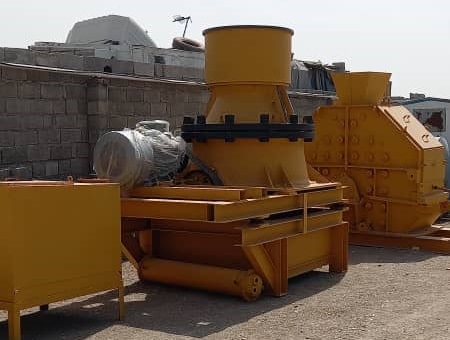
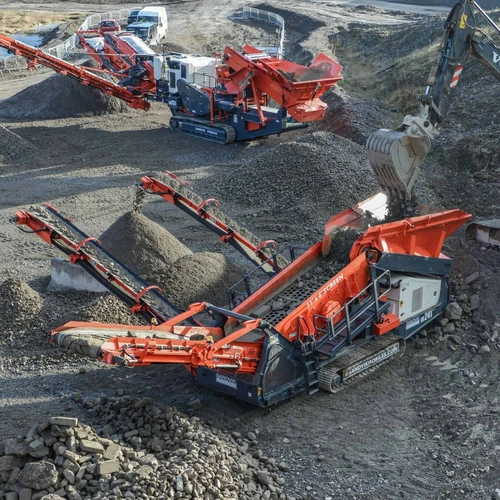
The hydraulic crusher is used to crush hard rocks in mines and various industries. With its unique features, this machine has efficient and durable performance for producing crushed materials of various sizes.
What are the technical specifications of the hydraulic crusher?
Production capacity: 100 to 700 tons per hour depending on the model and type of stone.
Engine power: From 75 kW to 250 kW for different models.
Hydraulic pressure: Between 110 and 150 bar for optimal performance.
Application: Suitable for crushing hard rocks such as granite, iron ore and lime.
Lubrication system: Improves performance and extends the life of the machine with hydraulic pumps.
Cooling system: Uses a cooler to maintain the temperature of the machine during operation.
How much does a second-hand hydraulic crusher cost?
The price of a second-hand hydraulic crusher depends on the model, technical condition and year of manufacture. Second-hand hydraulic machines are cheaper than new ones, but they require more repairs and maintenance.
What are the types of hydraulic crushers?
property | Production capacity | Engine power | Input stone size | Suitable for | Hydraulic pressure | Main application |
| Hydrocon 3000 | 150-300 tons per hour | 110 kW | 300 mm | Semi-hard and soft stones | 120 times | Limestone and sandstone quarries |
| Hydrocon 4000 | 200-400 tons per hour | 150 kW | 400 mm | Semi-hard and hard stones | 130 times | Iron ore and granite mines |
Hydrocon 5 (crushed rock) | 300-500 tons per hour | 180 kW | 450 mm | Resistant and hard stones | 140 times | Granite and iron ore mines |
| Hydrocon 6.5 (crushed rock) | 400-600 tons per hour | 200 kW | 500 mm | Very hard rocks | 145 times | Resistant and hard stones |
| Hydrocon 5.5 (crushed rock) | 400-600 tons per hour | 230 kW | 500 mm | Very hard rocks | 145 times | Hard and resistant minerals |
| Hydrocon 8 (crushed rock) | 500-700 tons per hour | 250 kW | 600 mm | Very hard rocks | 150 times | Very hard and resistant stones |
| Hydrocone crusher | 100-150 tons per hour | 75-100 kW | 200 mm | Fine and sandy materials | 110 times | Sand and gravel mines |
| Hydrocon Superior | 300 -500 tons per hour | 200-250 kW | 400 mm | Large, hard stones | 145 times | Coarse and resistant mines |
| Hydrocon 2/36 | 100-200 tons per hour | 70 kW | 150 mm | Light and soft material | 110 times | Limestone mines |
| Hydrocon 3/36 | 150-300 tons per hour | 90 kW | 250 mm | Semi-hard stones | 120 times | Limestone mines |
What is a hydrocone machine and what is its use?
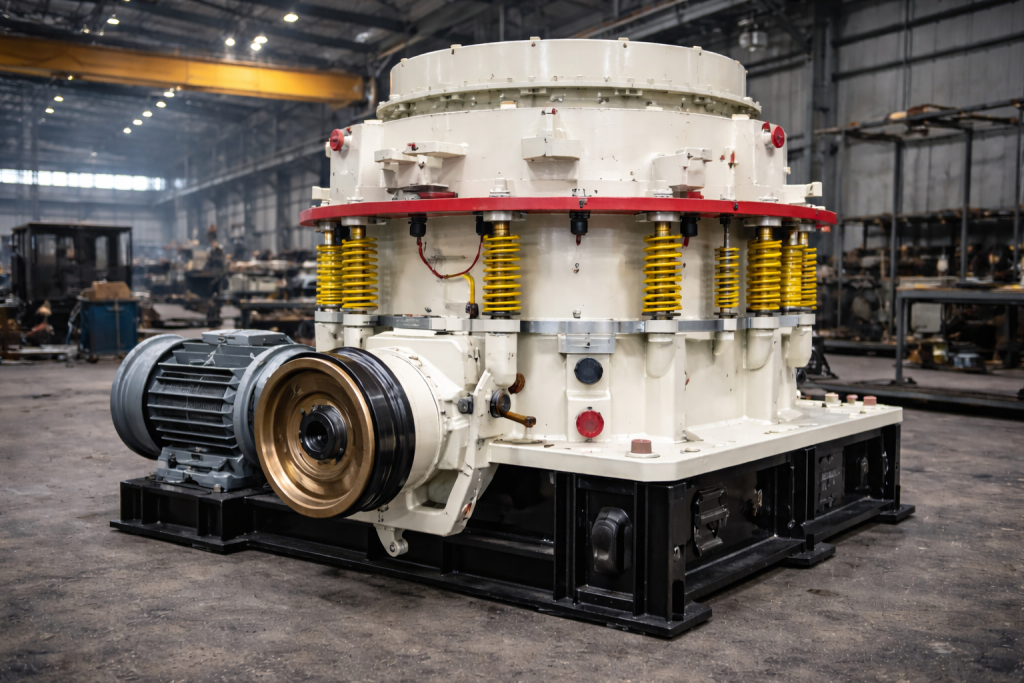
A hydrocone machine, also called a hydrocone crusher or a cone crusher, is a type of mineral crushing machine used to crush rocks and hard materials in mines and various industries. Due to its conical design, this machine is ideal for crushing large-sized materials into smaller sizes.
Applications of the hydrocone machine:
Crushing hard and resistant minerals such as iron ore, copper ore, granite and other minerals.
Used in secondary or stage crushing processes to reduce the size of rocks and minerals to smaller sizes.
For producing standard sand and gravel required in the construction and concrete industries.
For crushing limestone and cement raw materials to appropriate sizes.
For crushing and recycling various materials in recycling industries such as plastic and metal materials.
In crushing iron ore and producing steel and iron from extracted minerals.
Be sure to check out the article comparing the 4 most important parts of a hydrocone crusher.
How does a hydrocone work?
How a hydrocone works is as follows:
Material entry into the machine
Large materials, such as minerals or hard rocks, are first fed through the machine’s inlet. These materials can be of different sizes.
Fixed and moving cone operation
The hydrocone machine has two cones: a fixed cone and a moving cone. The moving cone moves in a circle around the fixed cone, and this movement creates pressure and crushes the rocks.
Crushing process
The materials are placed between the two cones and are subjected to pressure. This pressure causes the rocks and minerals to turn into smaller pieces. The size of these pieces depends on the machine settings.
Crushed material discharge
After crushing, the materials are automatically discharged from the machine and are ready to be used in the next stages of the stone crushing process or transferred to other material processing sections.
What are the structure and components of a hydrocone?
The structure of a hydrocone is designed to perform high-efficiency crushing of rocks and minerals. This device consists of mechanical and hydraulic components that work together to ensure optimal performance of the device.
Components of a hydrocone and their roles:
Top shell of a hydrocone: The upper chamber on which the fixed cone is installed.
Hydrocone oil tank: Stores hydraulic oil for lubrication and cooling.
Concave mantle: Fixed and movable cones that perform the crushing process.
Main shaft of a hydrocone: Transfers power from the engine to the cones.
Hydrocone crank gear: Transfers motion from the pinion gear to the main shaft.
Hydrocone head center: Maintains the fixed cone and its precise positioning.
Hydrocone gasket: Prevents oil and water leakage at the joints.
Hydrocone spider cup: Divides the force applied to different shafts.
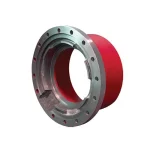
Hydrocone housing: The main chamber where all the components of the device are placed.
What is the hydraulic oil system?
The hydraulic oil system is one of the important components of this machine, which is used to lubricate and cool the moving parts of the machine. This system is designed to reduce friction between moving parts such as shafts, gears and cones, thus preventing wear and tear of the parts.
The hydraulic oil system typically includes an oil tank, hydraulic pumps, filters and oil transfer pipes that continuously pump oil to the moving parts of the machine. This system ensures optimal performance of the machine in the long term by preventing overheating and reducing friction.
Troubleshooting and repairing the hydraulic machine
Common problems of the hydraulic machine and how to troubleshoot them are as follows:
Loud noise during operation
This problem usually occurs due to wear of the gears or failure of the shafts, which causes friction and additional noise.
Solution: To fix this problem, the gears and shafts should be checked and replaced if necessary. Also, lubricating the moving parts will help reduce this noise.
Reduced crushing power
When the concave and mantle are worn out or the hydraulic system is not adjusted properly, the efficiency of the machine decreases.
Solution: Replacing worn parts such as the concave and mantle, as well as adjusting the pressure of the hydraulic system, can restore the crushing power.
Overheating of the machine
If the lubrication or cooling system is defective, such as clogged filters or oil leaks, the machine may overheat.
Solution: Checking the hydraulic cooler, changing the oil and filters, and also servicing the cooling system controls the temperature of the machine.
Problem in transmitting motion to the main shaft
A malfunction in the pinion gear or crankshaft gear causes the transmission of motion to the main shaft to not be performed properly.
Solution: To fix this problem, the damaged gears must be replaced and the transmission system must be examined.
What is the difference between a qubit and a hydrocon?
Both cobit and hydrocone devices are common devices for crushing rocks and minerals in mines and various industries, but they have different features and functions.
property | Qubit | Hydrocone |
Type of grinding | Impact (suitable for crushing soft and semi-hard materials) | Conical (suitable for crushing hard and harder stones) |
Performance | Crushing with impact force and high speed | Crushing with pressure and gradual compressive force |
Crushing capacity | Usually for medium to high capacities | Suitable for crushing hard and large stones. |
Output product | Relatively uniform size and mostly in the form of finer grains | Produce larger particles with a more precise size distribution |
Suitable for | Quarries of limestone and softer materials | Quarries of hard rocks such as granite and iron ore |
Maintenance cost | Lower maintenance costs and easier replaceable components | Higher maintenance costs due to more complex parts and the need for a better lubrication system |
Optimal performance | In situations where high-speed grinding is required | In situations where more precise grinding is required and damage to parts is reduced |
What are the important points before buying a hydraulic crusher?
The capacity of the machine should be appropriate for your needs. Depending on the required production volume and the size of the stones, you should choose a machine with the appropriate capacity.
The hydraulic crusher should be compatible with the type of stones and minerals you intend to crush. Harder stones require machines with special power and features.
It is important to choose a reputable brand and a machine with high build quality. Machines with reputable brands usually perform better and are less likely to break down.
Maintenance and repair costs should be considered. Some machines have higher maintenance costs and require specific spare parts and more periodic repairs.
Before buying, make sure the warranty conditions of the machine. Also, make sure that proper technical support is available to resolve possible problems.
Summary
The hydraulic crusher is designed to crush hard and resistant materials in various industries. This machine has an advanced lubrication and hydraulic system, which provides optimal performance and a long service life. Choosing the right hydro crusher should be based on your capacity needs, rock types, and maintenance costs. To purchase a hydro crusher with features that suit your needs, contact NovinCSM‘s sales team.
What are the frequently asked questions about hydrocon?
1. What is a cone crusher?
A cone crusher is a hydraulic crusher that uses a fixed cone and a moving cone to crush rocks. This machine is designed to crush hard and resistant rocks in mines and industries.
2. How does a hydrocon work?
The hydrocone uses hydraulic power and movable and fixed cones to crush rocks, and controls the size of the output material by adjusting the distance between the cones. This device is optimal for crushing hard rocks.
3. How is hydrocon troubleshooting done?
To troubleshoot a hydrocon, you must first identify signs of failure such as abnormal noise, reduced crushing power, or overheating. Then, you must inspect the various components of the machine, including the hydraulic system, motor, and gears, and repair or replace them if necessary.