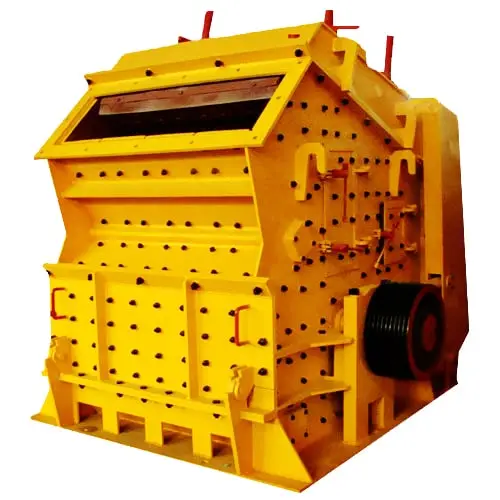
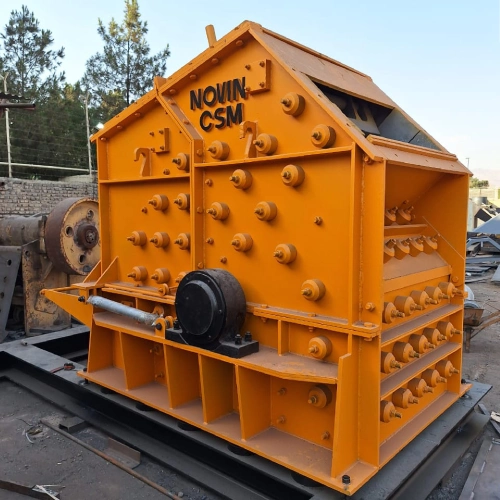
On this page you can find all the information about the Kubit crusher; from the technical specifications of the different models (HS7, HS10, HS11, 120 and 180) to the price, production capacity and functional features of each model. Also, a review of the Kubit types and how they work is provided on this page so that you can confidently choose the right model for your mine or production line.
| Crusher model | Production capacity (ton/hour) | Inlet opening size (mm) | Output product size (mm) | Motor power (kW) | Approximate weight (tons) | Application |
|---|---|---|---|---|---|---|
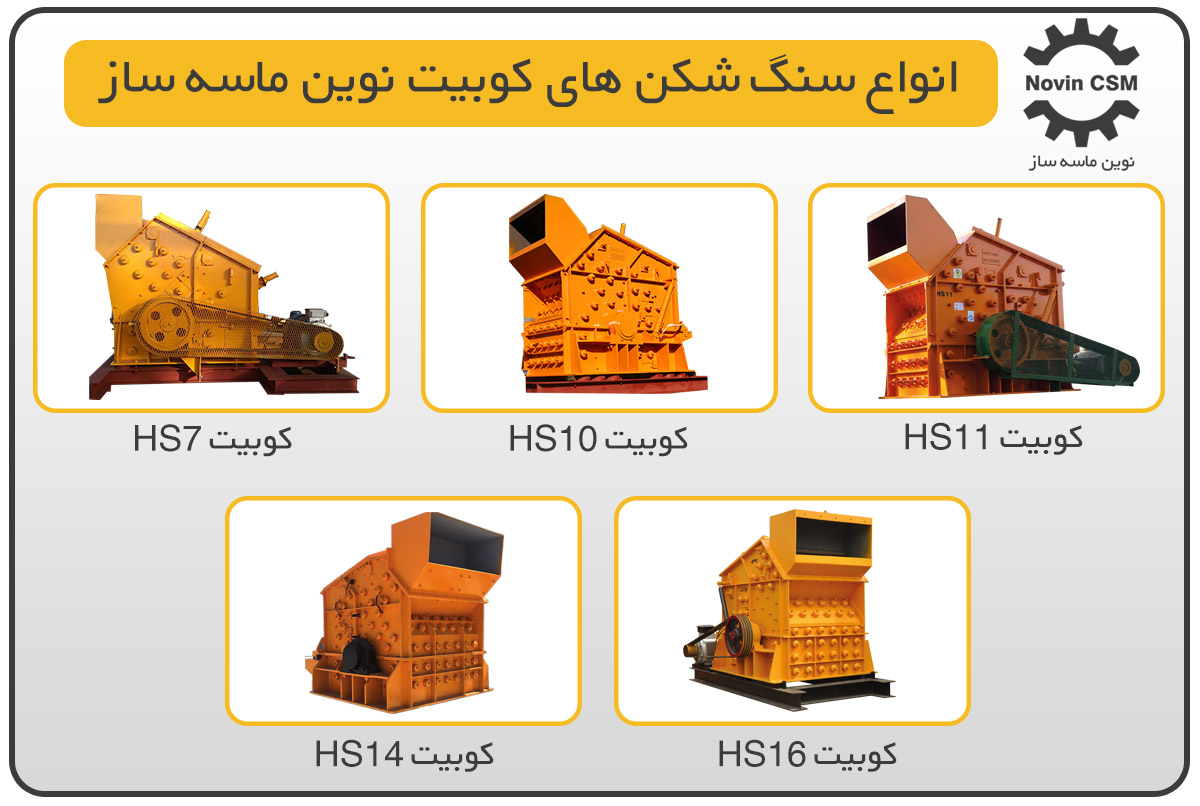
| HS7 | 40–80 | 700 × 400 | 0–50 | 55–75 | 6–7 | Secondary crushing of semi-hard rocks, production of fine sand and gravel |
| HS10 | 80–150 | 1000 × 600 | 0–60 | 110–132 | 12–13 | Secondary and tertiary crushing, suitable for sand and construction materials mines |
| HS11 | 100–180 | 1100 × 700 | 0–70 | 132–160 | 14–15 | Medium-sized production, secondary crushing of hard and semi-hard rocks |
| HS14 | 150–250 | 1400 × 800 | 0–80 | 160–200 | 18–20 | Crushing larger rocks, high capacity sand and gravel production lines |
| HS16 | 200–350 | 1600 × 900 | 0–90 | 200–250 | 22–24 | Industrial crushing and high-capacity sand production, suitable for large mines |
The Kubit crusher is an impact device that, unlike the cone crusher, crushes rocks with direct impact. This device is designed for secondary and tertiary crushing of semi-hard rocks and helps produce uniform grain size. Kubit is used in sand and gravel mines, construction material production lines, and sand makers, and by choosing the right model and capacity, you can increase the efficiency and productivity of production lines.
Kubit applications in mines:
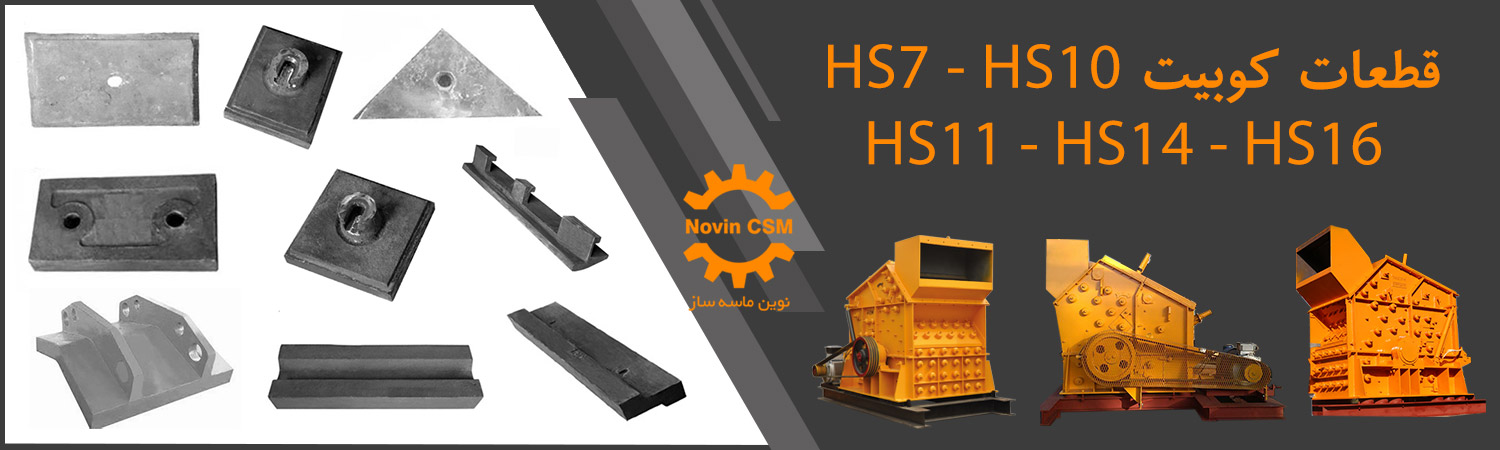
The price of a Kubit crusher depends on the model, capacity, and brand of the machine. Factors such as the Kubit model (HS7, HS10, HS11, HS14, HS16), production capacity, inlet and outlet size, and engine power have a direct impact on the price. In addition, factors such as the quality of the wear parts, installation, transportation, and after-sales service are also taken into account in determining the final price. In addition to buying a new machine, it is also possible to buy a second-hand Kubit at a reasonable price, which is economical for small and medium-sized mines.
| Piece | Role and application |
|---|---|
| Hammers | Primary crushing of rocks and direct impact generation |
| Anvils | Guiding stones and secondary crushing, creating uniform granulation |
| Rotor | Power transmission and rotation of hammers, creating continuous impacts |
| Bearings | Supporting shafts and reducing friction in rotational motion |
| Main shaft | Power transmission from motor to rotor |
| Jacks and adjustment screws | Adjusting the distance between the rotor and the anvil and controlling the size of the output product |
| Electromotor | Providing rotational force for the rotor and hammers |
| Electrical panel | Machine performance control, engine and hydraulic system protection |
| O-rings and washers | Sealing and protecting the hydraulic and lubrication system |
| Bushes | Reduce friction and protect shafts and rotors |
| Belts and pulleys | Power transfer from motor to rotor |
| Qubit type | Grinding mechanism | Main application | Production capacity (approximate) | Device dimensions (length×width×height) | Approximate weight (tons) | Motor power (kW) | Benefits |
|---|---|---|---|---|---|---|---|
| Two-way qubit | Crushing with two shafts and bidirectional jaw movement | Crushing of hard and semi-hard rocks, primary and secondary stages | 50–200 tons/hour | 3.5×2×2.5 | 6–8 | 55–110 | High strength, suitable for hard rocks, long life |
| Hammered Cubit | Crushing with rotating hammers on the rotor and impact with an anvil | Secondary and tertiary crushing of semi-hard and soft rocks | 40–350 tons/hour | 4×2.5×2.8 | 8–14 | 75–160 | Uniform granulation, adjustable output size |
| Sand making machine | Impact and friction grinding with sand production | Production of sand with precise grading | 50–300 tons/hour | 4.2×2.6×3 | 9–15 | 90–180 | Suitable for sand and gravel production lines, soft and uniform granulation |
| Cubit Behringer | Impact crushing with special hammers and anvils | Secondary and tertiary crushing, industrial sand production | 40–350 tons/hour | 4×2.5×2.8 | 10–16 | 75–200 | High quality, easy maintenance, high efficiency |
Both the Kubit and Hydrocone crushers are used to crush rocks, but their working methods are different. The Kubit crushes rocks with a direct hammer blow and is suitable for secondary and tertiary crushing of semi-hard and soft rocks and the production of sand and gravel with uniform grain size. In contrast, the Hydrocone, with its conical design, compresses and crushes rocks, is used for hard rocks and industrial production with precise grain size.
The Kubit output is softer and easier to maintain, but the Hydrocone has greater crushing power and its parts have a longer life. Therefore, the choice between the two depends on the type of mine, rock type and production purpose; the Kubit is suitable for sand and gravel production, and the Hydrocone is for hard rocks and industrial production.
In this section, we have provided you with the catalog and technical drawing of the Kubit 120 so that you can check the technical specifications, dimensions, production capacity, engine power and details of the parts. With this information, you can choose the right model for your mine, plan the installation and maintenance of the device and optimize the productivity of the production line.
📥To download the catalog and drawing, just click on the link below.
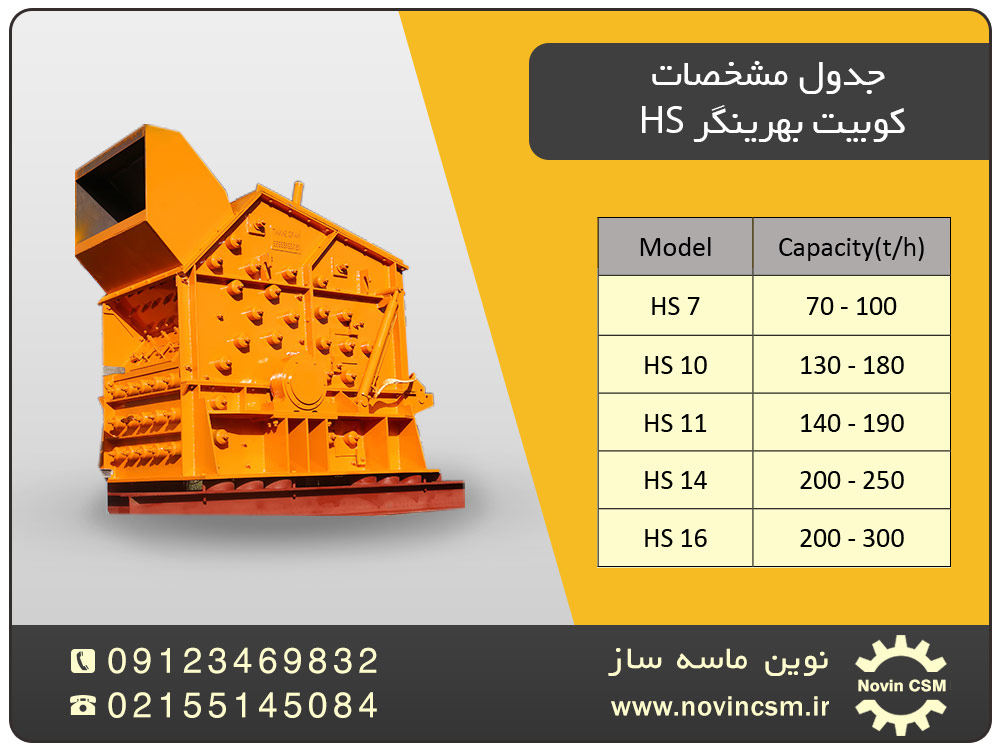
HS impact crusher or Cubit HS is one of the most widely used equipment in the production line of factories, which plays an important role in crushing stones. Cubit HS is used as a primary or secondary crusher and is an essential part of the mineral processing process. The Cubit HS crusher works by impact and crushes the input materials with the help of hammers installed inside the crusher. The Cubit crusher consists of a rotor on which 2 to 6 rows of hammers are located. These hammers throw the parts entering the machine towards the Cubit anvil, and these stones are crushed inside the anvil with the help of a brick shield and a side plate.
Impact crushers are designed and manufactured in various types that have various applications depending on the needs of different industries. Among the most important types of these devices are the horizontal impact crusher (HSI) and the vertical impact crusher (VSI).
| Crusher model | Production capacity |
|---|---|
| NJC 120*100 | 275-500 |
| NJC 110*90 | 125-200 |
| NJC 90*60 | 80-150 |
| NJC 85*55 | 40-110 |
– High reduction ratio for finer output material
– Uniform particle shape ideal for asphalt and concrete
– Durable hammers and wear-resistant components
– Easy maintenance with quick access design
– Adjustable output size for different applications
– Reliable performance in continuous operations
The Cobit is an impact crusher that crushes rocks by the direct impact of rotating hammers on the rotor. This machine is designed for secondary and tertiary crushing of semi-hard and soft rocks and is used in sand and gravel quarries, construction material production lines, and sand makers.
The cobit has an impact mechanism, the output product is soft and uniform, and is used for secondary and tertiary crushing and sand production. However, the hydrocone is conical, has higher crushing capacity and longer component life, and is suitable for hard rocks and industrial granulation preparation.
The life of hammers depends on the type of rock, the amount of use, the size and material of the hammers. Standard hammers usually have a useful life of between 6 and 12 months. Using quality hammers and proper maintenance can extend their life.
اگر دنبال خرید با چک هستی
همین الان تماس بگیر