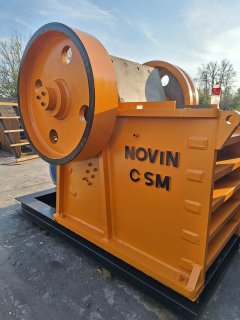
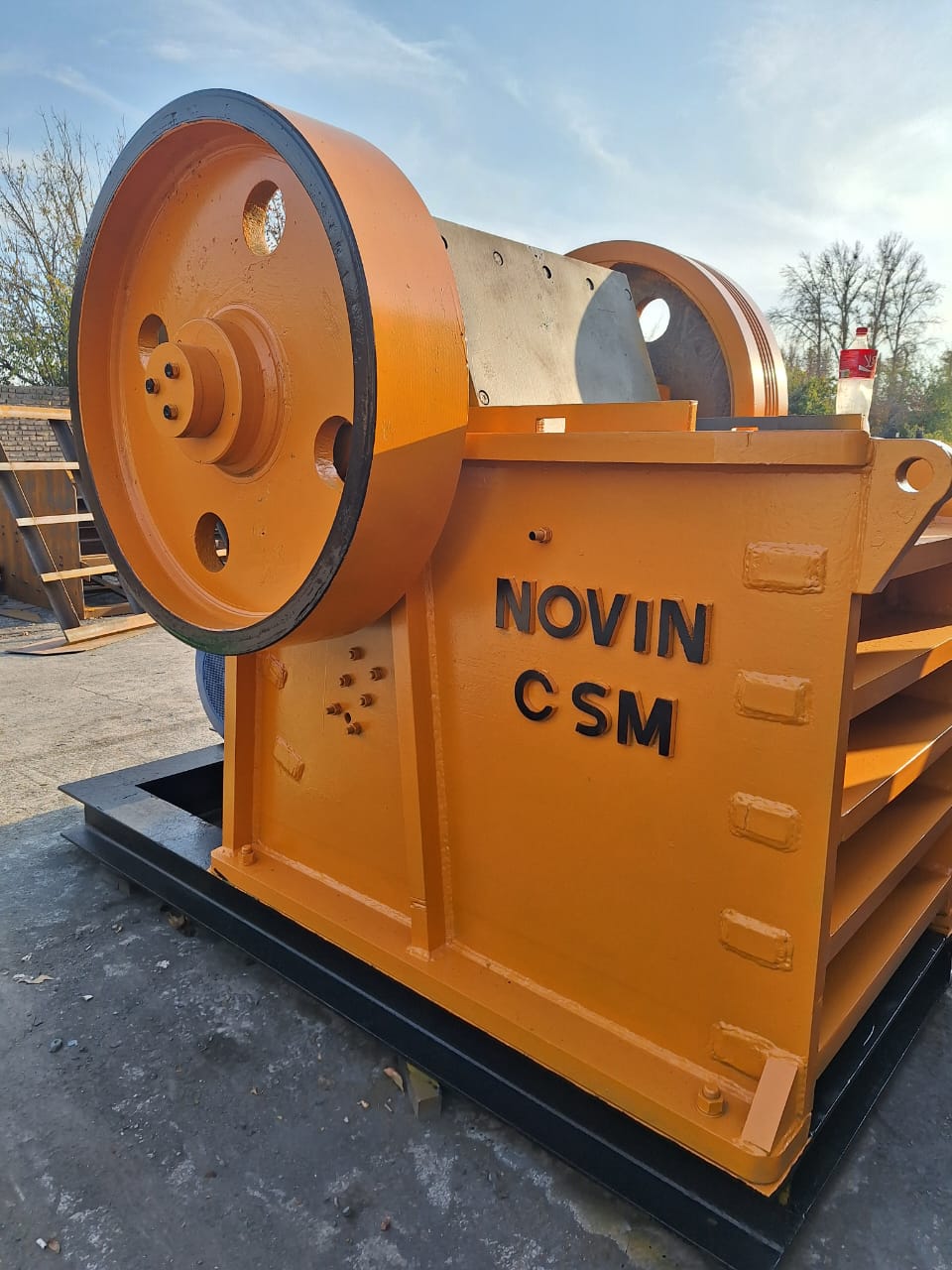
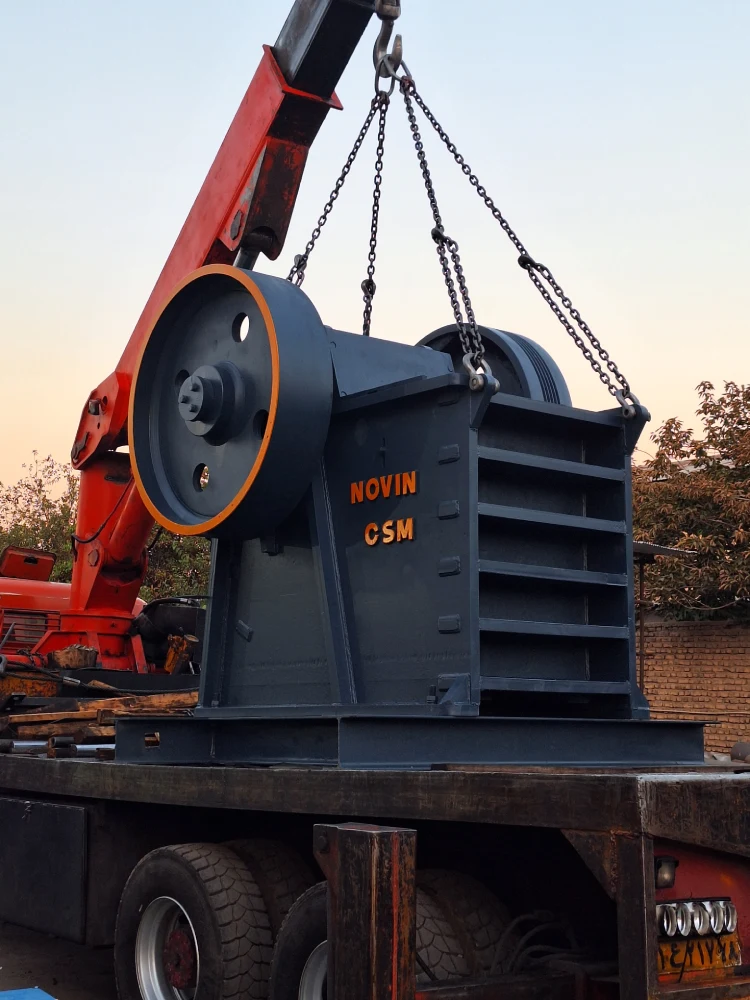
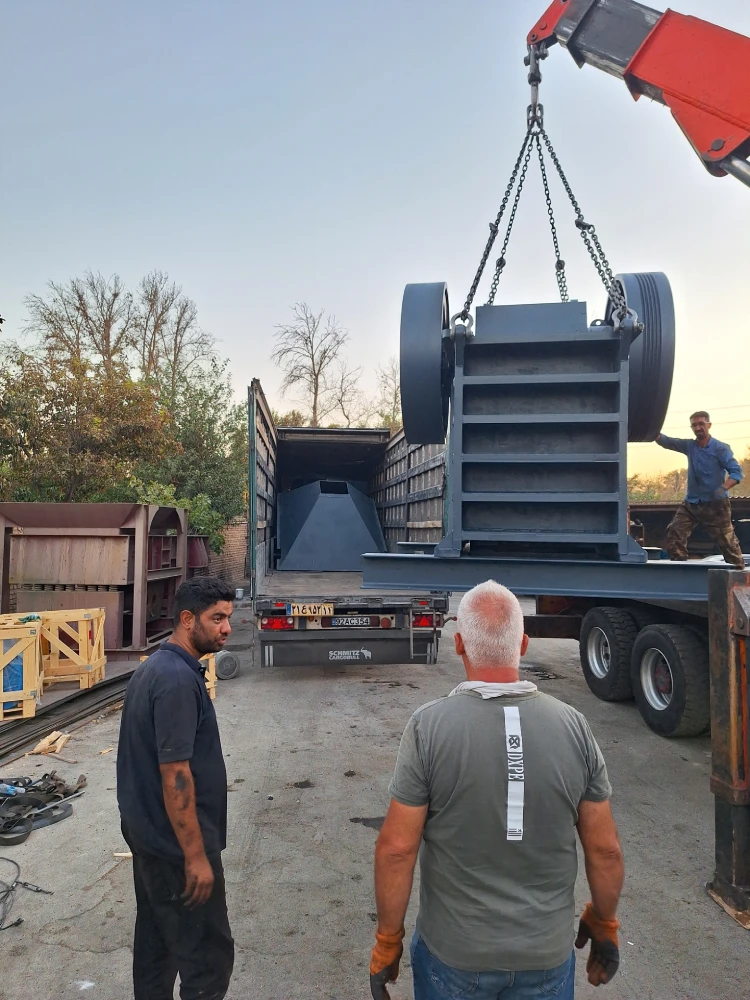
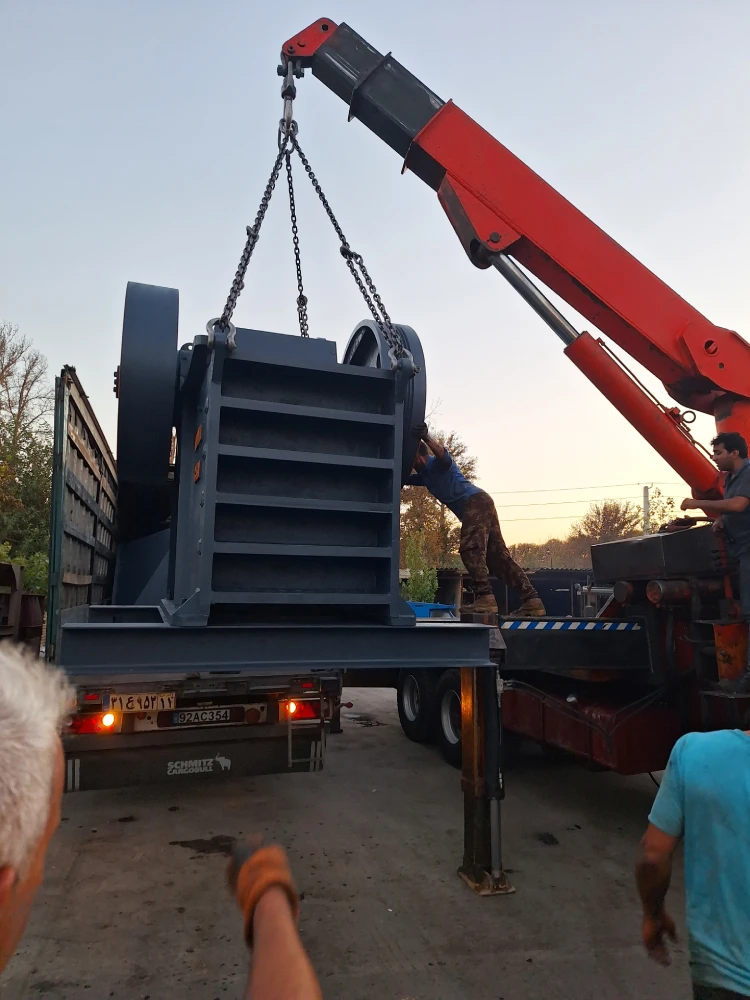
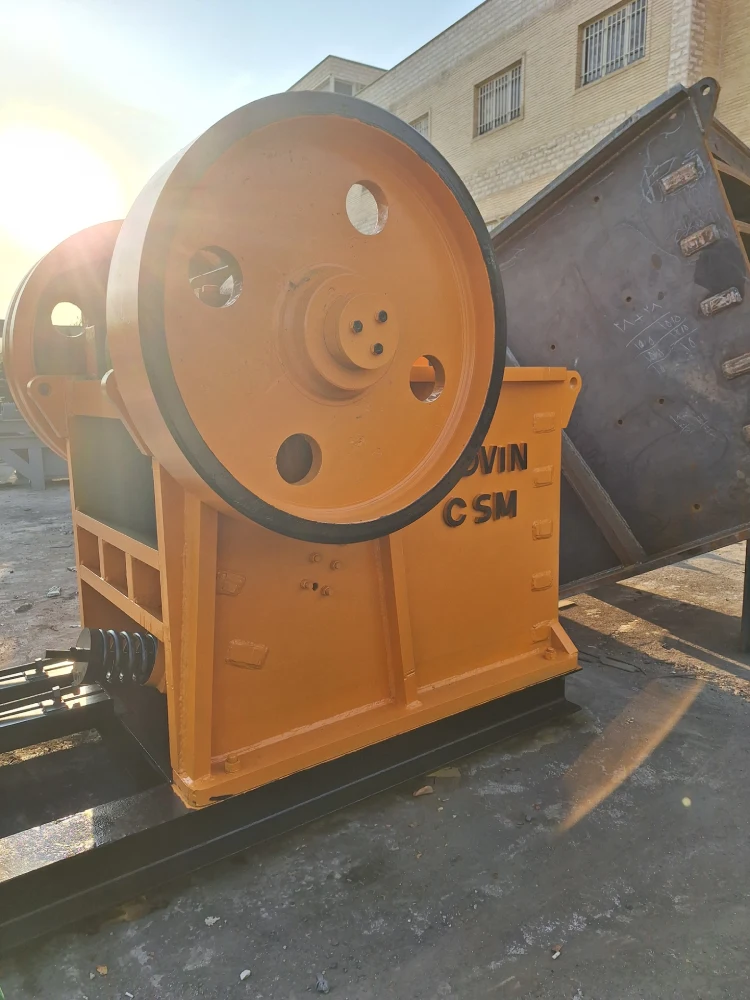
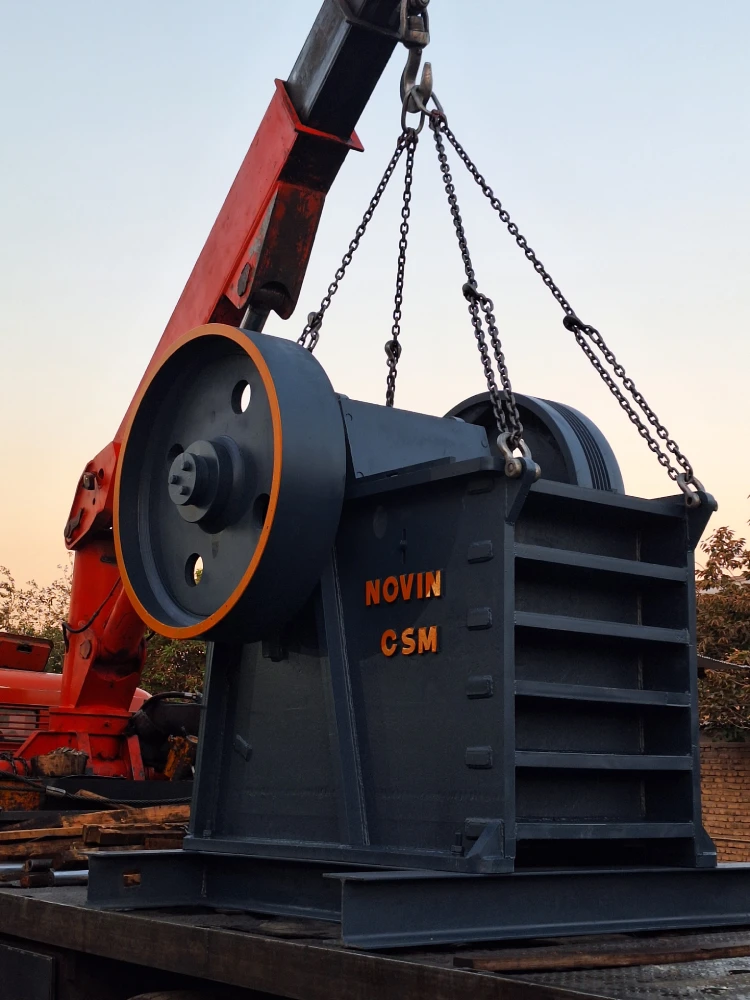
The NovinCSM jaw crusher, with its industrial design and strong performance, is suitable for crushing all kinds of rocks and minerals. With its diverse capacities and advanced features, this machine fully covers the needs of mines and industries. On this page, you can view the technical specifications, price, and purchase options of the machine and make a confident choice.
| Jaw crusher model | Opening dimensions | Production capacity (ton/hour) | Motor power (kW) | Machine weight (ton) | Main application |
|---|---|---|---|---|---|
| Jaw crusher 120×100 / 100×120 | 120 × 100 | 100–250 | 75 | 10 | High capacity and greater durability |
| Jaw crusher 125×30 / 30×125 | 125 × 30 | 80–200 | 65 | 9 | Crushing materials with specific input sizes |
| Jaw crusher 45×65 / 65×45 | 65 × 45 | 15–50 | 22 | 4 | Limited spaces and low production |
| Jaw crusher 55×80 / 80×55 | 80 × 55 | 25–75 | 30 | 5 | Primary crushing of hard materials |
| Jaw crusher 63×100 / 100×63 | 100 × 63 | 50–120 | 40 | 6 | Medium capacity and high durability |
| Jaw crusher 90×40 / 40×90 | 90 × 40 | 10–40 | 18 | 3 | Suitable for soft and low-wear materials |
| Jaw crusher 90×60 / 60×90 | 90 × 60 | 20–60 | 25 | 4.5 | Materials with medium hardness and medium capacity |
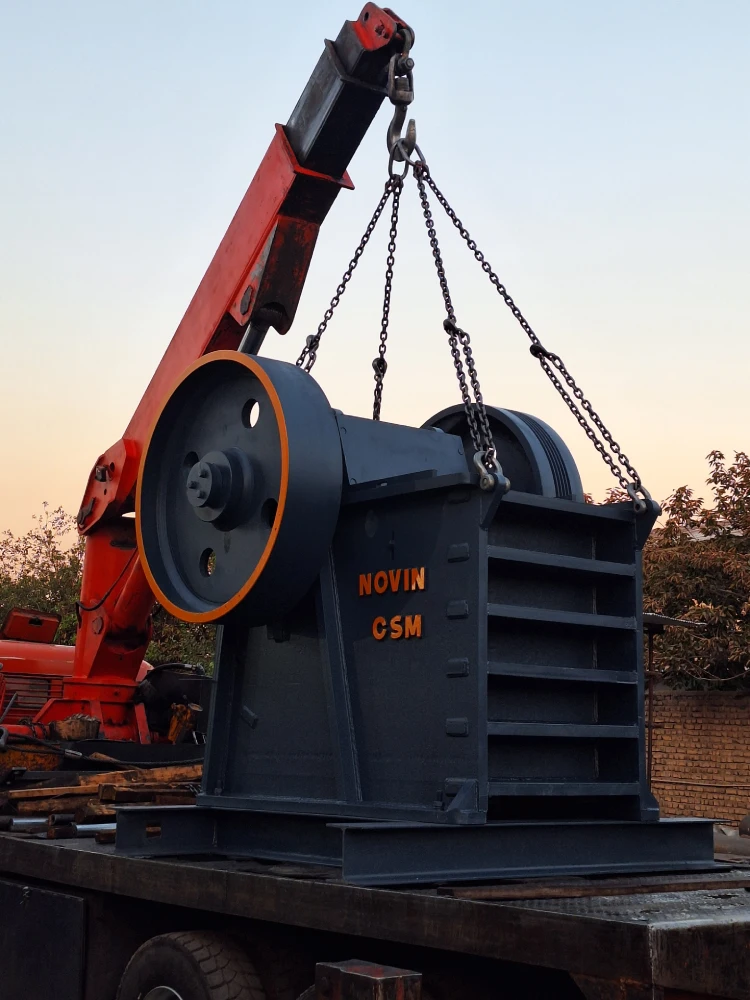
A jaw crusher is a device used for the primary crushing of rocks. This device has two jaws: a fixed jaw and a movable jaw that pressurizes and crushes rocks with a reciprocating motion. The inlet and outlet openings are adjustable so that the final size of the crushed material is appropriate for the needs of the production line. This simple but robust mechanism enables the device to crush a variety of hard rocks such as granite, basalt, and quartz.
| Category | Sample model (gap × width) (cm) | Maximum feed size (mm) | Approximate capacity (tons/hour) | Engine power (kW) | Approximate weight (kg) | Common use |
|---|---|---|---|---|---|---|
| Laboratory | 30 × 15 | ≤ 50 | 0.1 – 2 | 0.5 – 2 | 50 – 200 | Laboratories, sampling, research experiments |
| Small / Workshop | 40 × 60 | ≤ 100 – 150 | 5 – 30 | 15 – 45 | 2,000 – 10,000 | Workshops, local materials production, small mines |
| Semi-industrial | 60 × 90 | ≤ 200 – 300 | 50 – 120 | 55 – 90 | 12,000 – 25,000 | Medium mines, sand production lines |
| Industrial / Heavy | 100 × 120 | ≤ 350 – 500 | 150 – 350+ | 110 – 250 | 25,000 – 60,000+ | Large mines (iron ore, copper), primary feedstock for large lines |
The price of a jaw crusher varies depending on the capacity, opening size, and quality of parts. New machines and reputable brands are more expensive, while second-hand machines are cheaper but may need repair. After-sales service and installation also affect the price.
| Piece | function |
|---|---|
| Jawbone | Primary crushing of rocks and direct pressure bearing of minerals |
| Toggle | Transferring power from the motor to the movable jaw and creating a crushing motion; protecting the device against very large stones |
| Bearings and bearings | Supporting shafts and reducing friction of moving jaw movement |
| Anvil | Protecting the device body against abrasion and stone impacts |
| Feeder | Uniform feeding of stones into the jaw opening and prevention of blockage |
| Engine and powertrain | Providing the necessary energy to move the movable jaw and crush the material |
| Frame and body of the device | Maintaining and stabilizing parts, withstanding mechanical forces from grinding |
| Lubrication system | Reducing friction and heat of moving parts and increasing the life of bearings |
| Screws and fittings | Connecting and fixing various parts of the device |
| Protective system and coatings | Protects the operator and prevents stone and dust splashes |
Of course, you should know that the jaw movement speed, angle, and motor power determine the quality of crushing and production capacity, and the toggle, in addition to transmitting power, also plays a protective role. If a very large stone enters the machine, it prevents damage to the jaws and motor.
Regular maintenance and timely repair of the jaw crusher will increase the useful life of the machine, prevent sudden stoppage of the production line, and reduce repair costs. It is very important to observe safety precautions and a regular repair schedule.
| Category | Activities |
|---|---|
| Daily visits and inspections | Checking wear parts such as jaw combs, toggles, and anvils Checking bearings and their lubrication levels Check belts, couplings, and engine condition Check for oil or water leaks and abnormal vibration |
| Preventive maintenance | Replacing the jaw and anvil before complete wear Regular lubrication of bearings and bearings Setting the gap (CSS) and the feeder periodically Checking and tightening screws and connections |
| Major repairs | Replacing worn out wear parts (jaw shoulder, toggle, anvil) Checking and replacing bearings in case of damage Engine and transmission service Correction and readjustment of the device opening (CSS) |
To view the full details of each jaw crusher model, download the official machine catalog. In this catalog, you can see the machine dimensions, crushing capacity, inlet and outlet openings, technical specifications and the location of key parts in detail.
📥 Download Jaw Crusher Catalog
By downloading the catalog, you can easily choose the right model for your project and plan the installation and commissioning.
A jaw crusher is a device used for the primary crushing of rocks and minerals. This device has two jaws; one fixed and the other movable, which crushes the rocks by reciprocating motion.
The laboratory jaw crusher has a low capacity and its small dimensions are suitable for sampling and research tests, while the industrial jaw crusher has a high capacity and large dimensions and is used for crushing rocks in mines and large-volume industrial projects.
Choosing the right size depends on several factors: the size of the input rocks, the required capacity of the mine, and the needs of the production line. For small mines with low rock volumes, a small or laboratory jaw crusher is sufficient. However, for industrial mines with large rocks and high workloads, an industrial jaw crusher with an opening of 80 x 100 cm or larger is usually used to have adequate crushing capacity and maintain production line efficiency.

اگر دنبال خرید با چک هستی
همین الان تماس بگیر