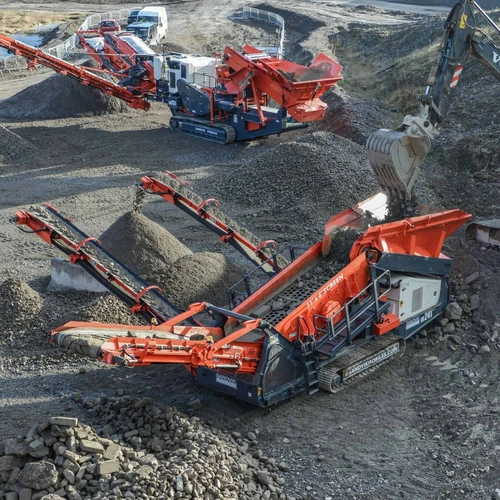
| Conveyor belt definition | A conveyor belt is a device for transporting materials between different points using strong belts. It was first introduced in the 1990s and is used in mines and factories. |
| Types of conveyor belts | Hand-picked, plastic, PVC, fabric, modular, tarpaulin, inclined, chain and curved conveyor belts. Each is selected based on the material and specific application. |
| Important applications | Food industries, mines, metal and cement factories; Used in assembly lines and operation in different locations. |
| Brief history | The first conveyor assembly line was used in 1913 at the Ford factory by Henry Ford, after which it was widely used in various industries. |
| Contact to purchase | To order and find out the price of various conveyor belts and related parts, contact Novin’s Sand Maker sales experts. |
Conveyor belt comparison table
| Conveyor belt type | Technical specifications | Applications | Advantages |
| Manual conveyor belt | Adjustable speed, rubber or PVC belt, operator controlled | Food industries, cereal factories, manual packaging lines | Precise control by the user, suitable for delicate products, low power consumption |
| Plastic conveyor belt | Three layers (two plastic layers + one warp and weft layer), resistant to wear and moisture | Cement, mining, metal industries | High weight capacity, moisture and impact resistance, long life |
| PVC conveyor belt | Made of polyvinyl chloride, washable, smooth or ribbed surface | Food, pharmaceutical, health industries | Moisture-resistant and disinfectable, light and hygienic, suitable for slippery materials |
| Fabric conveyor belt | Combined fibers (linen, polyester, felt), flexible and soft | Confectionery, pharmaceutical, light food industries | Light weight, smooth movement, suitable for sensitive and light materials |
| Modular conveyor belt | Belt made of hard plastic parts, resistant to chemicals and water | Washing lines, food and hygiene industries | High resistance to moisture and heat, easy to wash, long life |
| Conveyor belt Tarpaulin | Outer and inner layer of tarpaulin belt, high tensile strength | Heavy industry, heavy load packaging | High weight capacity, high durability, tear resistant |
| Inclined conveyor belt | With ribbed surface and safety lock system, can be moved up or down | Material transfer lines between floors, packaging industries | Prevents material from falling, suitable for heights, high security |
| Chain conveyor belt | Belt made of Metal chains, high tensile strength | Sugar industries, grains, metal parts transportation | Heat resistant, high durability, suitable for heavy industrial environments |
| Curved conveyor belt | Design with 30 to 180 degree rotation, PVC or plastic belt | Limited spaces, multi-lane production lines | Space saving, flexible in line design, easy installation |
What is a conveyor belt?
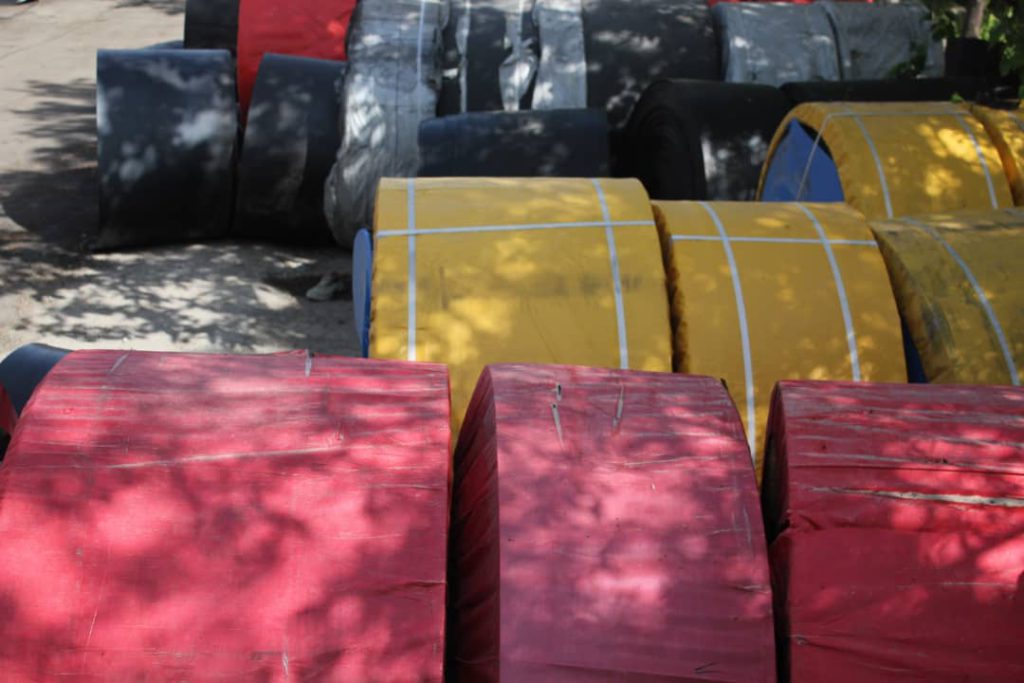
A conveyor belt is a piece of equipment used in grocery stores, factories, mines, etc., that uses a sturdy belt to move various materials from one point to another. The first type of conveyor belt was produced in the 1990s under the supervision of Sandvik, and its belt was made of steel. In 1905, changes were made to the original form of conveyor belts produced under the supervision of Sandvik, and today’s form of flexible conveyor belts was created, which were used in mines to move rocks.
In 1913, conveyor assembly lines began operating at the Ford factory under the supervision of Henry Ford, and since then, various factories and mines have used conveyor belts to move their products.
What are the types of conveyor belts?
Conveyor belt types fall into several general categories depending on the type of conveyor belt rubber, its application, and the load capacity placed on it, which we will introduce below.
Hand-picking conveyor belt: For hand-picking grains in food factories, a type of conveyor belt called a hand-picking conveyor belt is used, the speed of which and the load amount will depend on the input settings from the operator. Plastic conveyor belt: Plastic conveyor belt is one of the most widely used types of conveyor belts, which consists of two plastic layers and a weft layer. The weft layer of the plastic conveyor belt is located in the middle, and the two lower and upper layers are made of plastic, which helps increase the strength of the belt. The main use of plastic conveyor belts is in the cement, mining and metal industries, and because it is three-layered, it exhibits a very high weight bearing capacity. In production lines where there is a possibility of products falling, the ribbed type of plastic conveyor belt is used. PVC conveyor belt: Due to the special material of PVC conveyor belt, it is used in the food and health industries. This type of conveyor belt, like plastic conveyor belt, is produced in two types: plain and ribbed, and in production lines where there is a possibility of materials slipping, the ribbed type is installed. Fabric conveyor belt: The type of fabric conveyor belt is made of linen, polyester, fabric and felt fibers and is widely used in the food, pharmaceutical, confectionery and other industries. Modular conveyor belt: In production lines where special operations are performed on products, a conveyor belt is needed that is resistant to external factors. In these situations, modular conveyor belts are used, which are more resistant than other types of conveyor belts and are used in food and hygiene products. In food and hygiene product production lines, operations such as washing or drying may be performed on them, and given the characteristics and special material of the modular belt, they will be used in these production lines. Tarpaulin conveyor belt: The outer and inner layers of the tarpaulin conveyor belt are made of tarpaulin belt, and the middle layer of the belt will also have unparalleled resistance to heavy equipment. The tarpaulin conveyor belt will have great tolerance against the input weight from the side of the materials placed on the belt. Inclined Conveyor Belt: In some production lines, it is necessary for materials to move from top to bottom or bottom to top instead of moving in a straight line. In these situations, it is recommended to use an inclined conveyor belt that also has a lock on it, which will prevent products from falling in the event of a power outage. Chain Conveyor Belt: As the name suggests, the belt of the chain conveyor belt is made of metal chains and is widely used in sugar and grain factories. Curved Conveyor Belt: This conveyor belt can rotate up to 180 degrees and is an excellent choice for small spaces. Curved conveyor belts can be easily placed in the corners of the factory and even small manufacturers can use them.
To purchase and find out the current price of conveyor belts and their parts, you can share your request with Novin Masesaz sales experts so that they can provide you with the necessary guidance. All Novin Masesaz products are of very high quality and are offered to you at a reasonable price.
To order and purchase and find out the price of various conveyor belts, contact us
FAQ
1. What is the difference between a PVC conveyor belt and a tarpaulin conveyor belt?
PVC tape is lighter, more hygienic, and suitable for food environments, but tarpaulin tape has very high resistance to heavy loads and is mostly used in the mining and construction industries.
2. How do we know what width and length of conveyor belt is suitable for our production line?
PVC tape is lighter, more hygienic, and suitable for food environments, but tarpaulin tape has very high resistance to heavy loads and is mostly used in the mining and construction industries.
3. When should we replace the conveyor belt?
PVC tape is lighter, more hygienic, and suitable for food environments, but tarpaulin tape has very high resistance to heavy loads and is mostly used in the mining and construction industries.
4. Which type of conveyor is suitable for small spaces or curved lines?
PVC tape is lighter, more hygienic, and suitable for food environments, but tarpaulin tape has very high resistance to heavy loads and is mostly used in the mining and construction industries.