How is AI transforming the mineral crushing and grinding industry?
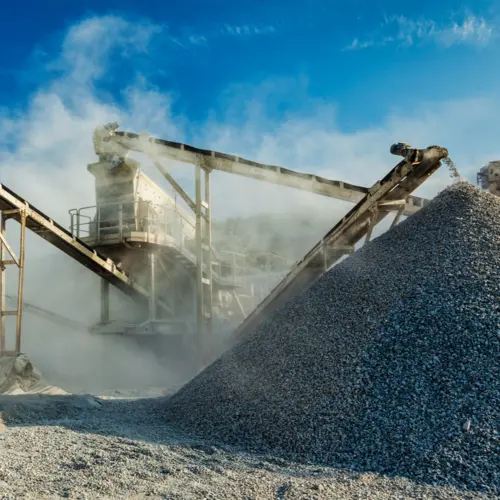
AI is revolutionizing the crushing and grinding process by analyzing real-time data, automatically adjusting equipment, and predicting failures. This technology dramatically increases the productivity of production lines by reducing energy consumption, increasing particle size accuracy, and eliminating human error. Soon, intelligent systems will replace manual controls and mines will move towards automated and sustainable operations.
Table of Advanced Trends in Mineral Crushing and Milling
Innovation | Description | Advantages |
1. Automatic and intelligent equipment control | AI automatically adjusts the speed, pressure and operating time of the crusher and mill to achieve optimal and uniform performance and reduce human errors. | • Reduce 15% energy consumption in the SAG mill |
2. Real-time monitoring and Internet of Things (IoT) | Sensors collect temperature, pressure, speed, and feed flow data and transmit it to AI to monitor and optimize machine performance in real time. | • 20% reduction in sudden stops |
3. Predictive Failure and Preventive Maintenance | AI algorithms identify equipment failure patterns and provide proactive alerts to ensure timely repairs. | • 30% reduction in unexpected failures |
4. Advanced Data Analytics for Product Quality | AI analyzes particle size, moisture, and product uniformity and provides adjustments necessary to maintain optimal quality. | • Increase granulation uniformity |
5. Integration with green and sustainable technologies | AI reduces resource consumption and pollutant emissions and helps meet environmental standards. | • Reduce CO2 and dust emissions by up to 15% |
5 Key Future Technologies in High-Efficiency Crushing and Milling
1. Automatic and Intelligent Equipment Control
In the future of crushing and milling, artificial intelligence will play the role of intelligent and self-adjusting equipment controller. These systems are able to adjust the speed, pressure, and operating time of the crusher and mill in real time to achieve optimal and consistent performance. This process not only reduces energy consumption, but also reduces excess stress on sensitive components, which significantly increases equipment life and production line productivity. Also, errors caused by manual adjustments or momentary decisions of operators will be minimized.
Benefits:
- 15% reduction in energy consumption in SAG mills with automatic control
- Reduction of unexpected stops due to human error
- Increase in component life and reduce maintenance costs
2. Real-time monitoring and Internet of Things (IoT)
In the near future, crushing and grinding equipment will be equipped with a network of sensors and smart systems that collect real-time data such as temperature, pressure, speed and feed flow. This data will be transmitted to artificial intelligence to monitor and optimize the performance of the equipment in real time. This process reduces unwanted stops and repairs of all types of crushers, enables quick decision-making for operators, and increases workplace safety.
Benefits:
- Reduces sudden equipment stops by 20%
- Ability to predict problems before serious breakdowns occur
- Increases employee safety and reduces the risk of damage to machinery
3.Predicting Failures and Preventive Maintenance
In the future of crushing and milling, artificial intelligence will have the ability to predict failures before they occur. By analyzing historical and real-time data on equipment performance, algorithms identify failure patterns and provide operators with the necessary warnings. This approach allows for timely preventive maintenance and prevents sudden stops and serious damage to equipment. As a result, production line productivity is increased and emergency repair costs are reduced.
Benefits:
- 30% reduction in unexpected breakdowns Conquistadors in production lines
- Possibility of timely replacement of critical parts before serious damage
- Optimization Schedule repairs and reduce operating costs
4. Advanced data analytics for product quality
In the future of crushing and grinding, AI will be able to accurately and instantly monitor and optimize product quality. By analyzing particle size, moisture, and material uniformity, AI can recommend crusher and mill settings that ensure the output remains at the highest quality level. This capability increases product consistency and reduces waste, and improves production line performance.
Benefits:
- Increases granulation uniformity and reduces product rejection
- Ability to automatically adjust equipment to maintain product quality
- Reduces the need for manual product inspection and correction
5.Integration with green and sustainable technologies
In the future, AI will act as a sustainable and environmentally friendly tool. By optimizing the use of energy, water and other resources, AI can reduce the emission of pollutants and dust. This trend not only increases economic efficiency, but also helps mines and industries to comply with environmental standards and strengthen their social responsibility role.
Advantages:
- Reduce CO2 and dust emissions by up to 15%
- Optimize resource consumption to reduce environmental costs
- Comply with environmental standards and increase mine responsibility
FAQ
1. How does artificial intelligence reduce energy consumption in crushing?
By analyzing real-time data from the devices, AI automatically adjusts the speed, pressure, and operating time of the mill and crusher. Energy is consumed only as much as necessary, avoiding power waste. However, its exact impact depends on the quality of the data, the type of device, and the training of the algorithms.
2. Does AI eliminate the need for expert operators?
No, AI does not replace the operator, but rather facilitates the operator’s tasks and reduces human errors. AI can provide alerts, predict problems, and optimize settings, but final decision-making and performance monitoring still require human expertise.
3. What type of data is needed for optimal performance?
To perform accurately, AI requires data on speed, pressure, temperature, moisture, particle size, and feed flow. Collecting quality, up-to-date data enables algorithms to make optimal adjustments, improving product quality and energy efficiency.
4. What will the future of crushing and milling look like in the next 5 years?
Crushing and milling are expected to become fully intelligent, self-regulating, and remotely monitored by combining artificial intelligence and the Internet of Things (IoT). These technologies will reduce human error, reduce energy consumption, increase component life, and ensure more consistent production.